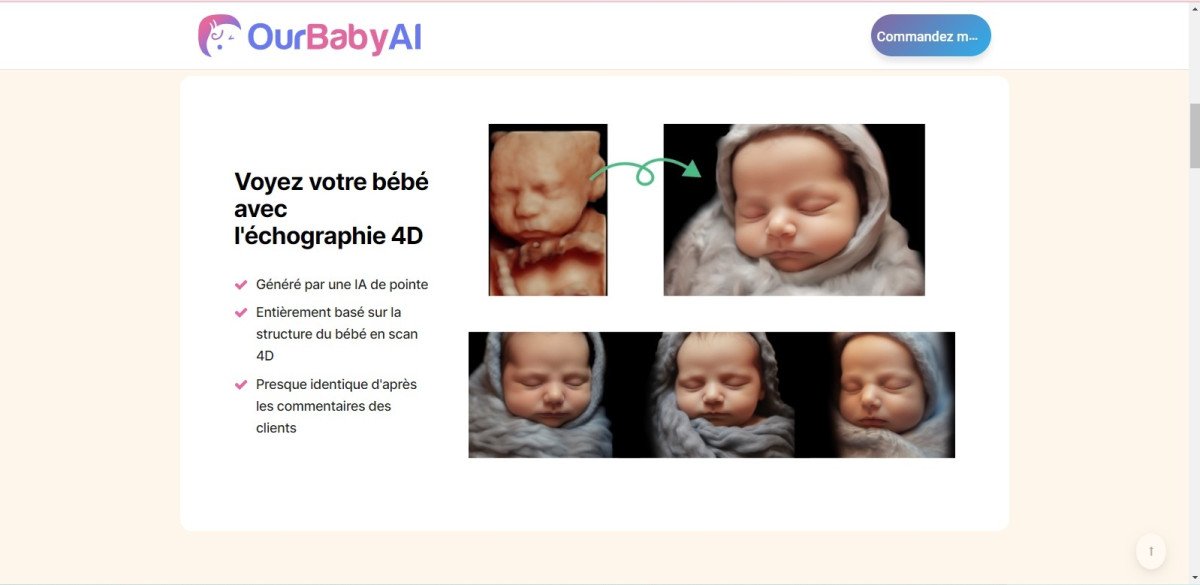
Have you ever wondered what your child might look like, or perhaps imagined a whimsical blend of two celebrity faces? The curiosity is universal, and thanks to advancements in artificial intelligence, we now have sophisticated tools that can offer a fascinating glimpse: Baby Face AI Generators. These ingenious systems take photos of one or two adults and conjure up a hypothetical image of a child, sparking joy, entertainment, and sometimes, a healthy dose of wonder. But how do these digital artists work their magic, what are their underlying scientific principles, and what critical ethical lines must we understand as we play with the future?
This guide dives deep into the technology, applications, and crucial considerations surrounding these captivating AI tools. We’ll unravel the algorithms, explore their practical uses, and equip you with the knowledge to use them responsibly and effectively.
At a Glance: Decoding Baby Face AI Generators
- What they are: AI software that generates a simulated child's face from one or two adult photos, operating purely on visual data.
- How they work: They use complex AI models (like Generative Adversarial Networks and Diffusion Models) to detect facial features, encode them into numerical data, blend these "digital blueprints," and then render a new, plausible face.
- Key applications: Mainly for entertainment, curiosity, creative design, educational demonstrations of AI, and character conceptualization.
- Ethical considerations: Privacy (data storage, deletion), bias (ensuring diverse training data), and transparency (results are simulations, not genetic predictions).
- Limitations: Cannot predict genetic inheritance or recessive traits; results are heavily dependent on input image quality and AI training data.
- Choosing a tool: Look for realism, ease of use, customization, AI accuracy, speed, fair pricing, and robust privacy policies.
- Future outlook: Expect even more realistic results, greater user control through natural language, and broader integration into creative workflows.
The Digital Cradle: How Baby Face AI Generators Work Their Magic
At its heart, a baby face AI generator isn't simply mashing two photos together. It's a highly complex process involving several layers of artificial intelligence, each playing a crucial role in creating a believable, blended image. Think of it as a digital artist who meticulously studies human faces, understands their underlying structure, and then paints a new portrait based on learned patterns.
Decoding Faces: From Pixels to Patterns
The journey begins with the AI "seeing" the faces you provide. This isn't just a casual glance; it's a precise analytical process. Using advanced computer vision techniques, typically powered by convolutional neural networks (CNNs) like MobileNet architectures or Mediapipe pipelines, the system first identifies individual faces within the input images.
Once a face is detected, the AI maps hundreds of "landmarks" — key points that define the structure and contours of the face. These landmarks pinpoint everything from the corners of the eyes and mouth to the tip of the nose and the curve of the jawline. This mapping establishes a structural guideline, creating a sort of skeletal framework that ensures the hybrid features in the generated baby face will align accurately and proportionally.
The AI's Blueprint: Encoding Features into Vectors
With the faces mapped, the AI then converts all that visual information into a precise mathematical language. Imagine taking every nuance of a face – its shape, symmetry, contours, textures, and even subtle expressions – and translating them into a long string of numbers. This is known as "feature encoding."
These encoded features are stored as high-dimensional "facial vectors" within a hidden space. Each vector represents a unique digital blueprint of the face's characteristics. When you provide two parent faces, the AI essentially creates two distinct vectors. These vectors become the foundational data for organizing and interpreting the visible traits that will eventually be blended into a new, hypothetical face.
Bringing Features to Life: The Generative Engine
This is where the true "magic" of AI artistry unfolds. The encoded features from the parent vectors are fed into a generative neural network, which then reconstructs the child’s face. Historically, Generative Adversarial Networks (GANs) were pivotal here. GANs involve two neural networks, a "generator" that creates images and a "discriminator" that tries to tell if the image is real or fake. This adversarial process forces the generator to produce increasingly realistic and expressive images.
However, the cutting edge of AI generation now often employs "diffusion models." These more advanced systems gradually remove noise from an image, refining it step by step until a clear, naturalistic picture emerges. Diffusion models excel at producing flexible, highly detailed images with fewer artifacts, making them particularly adept at mimicking delicate facial features like skin texture, hair strands, and subtle contours.
The generator blends the encoded features, interpreting common skeletal patterns and mixing visible traits like eye shape, nose structure, lip fullness, face shape, skin tone, and hair color. It doesn't just average them; it synthesizes a coherent, plausible unity that reflects elements from both parents in a visually blended representation.
Polishing the Portrait: The Final Touches
The generated image, while often remarkable, undergoes a final stage of refinement. This "rendering and post-processing" phase is crucial for enhancing the overall realism and visual consistency. AI algorithms improve accuracy, optimize color reproduction, and smooth textures.
Post-processing layers address inconsistencies, enhance lighting, and ensure the final result looks polished and natural, even if the source photos had varying lighting conditions or quality. This is where subtle details are perfected, making the simulated baby face look as real as possible, ready to charm and surprise.
Beyond Curiosity: Practical Applications of Baby Face AI Generators
While often seen as a fun novelty, baby face AI generators have a surprising array of applications beyond simple entertainment. Their ability to synthesize plausible human faces opens doors in various fields.
Entertainment and Personal Curiosity
Undoubtedly, the primary use case for these generators is personal entertainment. Couples, families, and even curious individuals enjoy seeing hypothetical future children. It’s a playful way to imagine genetic possibilities and share a lighthearted moment with loved ones. It taps into a fundamental human fascination with what might be. Many flock to platforms like our baby face generator free to explore this possibility themselves.
Creative Design and Character Conceptualization
For artists, writers, and designers, these tools are invaluable for conceptualizing new characters. Imagine needing to visualize a child character who needs to bear a resemblance to two existing adult characters in a story or game. Instead of relying purely on imagination or manual blending, an AI generator can provide a strong visual starting point, streamlining the creative process for everything from storyboarding to game design.
Educational Insights into AI and Genetics
These generators serve as excellent demonstrations of generative AI capabilities. Educators can use them to illustrate how AI learns from vast datasets of real faces, identifies patterns, and then creates novel, yet plausible, outputs. They can also subtly introduce concepts of facial features, genetic traits, and how they combine, albeit in a simulated context. It offers a tangible, engaging way to understand how AI image generation works.
AI Research and Development
In laboratories and research environments, baby face generators contribute to the ongoing development and testing of generative AI architectures, particularly diffusion models. Researchers can use these specific applications to refine algorithms, improve the naturalism of AI-generated faces, and push the boundaries of synthetic intelligence. It's a contained, understandable problem set for exploring broader generative AI capabilities.
Navigating the Digital Nursery: Ethical and Privacy Considerations
The captivating nature of AI-generated baby faces makes it easy to overlook the critical ethical and privacy implications. As with any technology that handles sensitive personal data, especially facial images, a thoughtful approach is paramount.
The Privacy Imperative: What Happens to Your Photos?
When you upload your image to an AI baby face generator, you're entrusting a piece of highly personal biometric data to a third party. The most crucial question becomes: What happens to those images after processing?
- Transparency is Key: Reputable platforms must clearly disclose their data handling policies. This means explicitly stating whether your uploaded images are stored, deleted immediately after processing, or used for retraining their AI models.
- Deletion and Non-Retention: The gold standard for privacy is a policy that ensures images are not stored beyond the immediate processing time and are deleted permanently shortly thereafter.
- Usage for Retraining: Some services might use anonymized images to further train their AI. While this can improve the technology, users must be informed and provide explicit consent if their data is to be used in this way. Always prioritize tools with clear policies that prioritize your privacy, aligning with general AI privacy best practices.
Battling Bias: Ensuring Fairness in AI Generation
AI models learn from the data they are fed. If a training dataset is not diverse and representative of humanity's full spectrum of ethnicities, skin tones, facial structures, and expressions, the AI can develop biases.
- Diverse Datasets: Ethical AI development demands the use of vast and diverse datasets to prevent the AI from altering or misrepresenting specific personality traits, racial features, or gender characteristics in its generated output.
- Avoiding Stereotypes: A biased AI might inadvertently perpetuate stereotypes or struggle to generate realistic results for individuals outside its primary training data, leading to misinterpretations or unnatural-looking outcomes.
- Continuous Improvement: Developers must continuously audit and refine their models to eliminate potential biases, ensuring that the generated baby faces are respectful and representative of all individuals.
Simulation, Not Prediction: Setting Realistic Expectations
It's vital to remember that the results from a baby face AI generator are just that: simulations. They are creative interpretations produced by an algorithm, not scientific, genetic predictions or biological truths about a future child.
- Transparency in Limitations: Ethical use requires transparent communication about these limitations. The AI cannot account for complex genetic inheritance, recessive traits, or the myriad biological probabilities that truly determine a child's appearance.
- Confidentiality: Treat the generated images with the same discretion you would any personal photo. While they are simulations, they still involve images of real people and should be handled respectfully.
- Awareness of AI Limitations: Understand that the AI blends visible traits based on learned patterns. It doesn't analyze DNA, blood types, or any underlying biological factors. It's a sophisticated guess, powered by algorithms, designed for visual plausibility, not scientific accuracy.
The AI's Limits: What Baby Face Generators Can't Tell You
Despite their impressive capabilities, baby face AI generators operate within specific technical and biological constraints. Understanding these limitations is crucial for managing expectations and appreciating the true nature of their outputs.
Beyond Genetics: Recessive Traits and Biological Probabilities
This is perhaps the most significant limitation. Human genetics are incredibly complex, involving dominant and recessive genes, polygenic traits, and random recombination. An AI generator, by design, cannot account for any of this.
- Visible Traits Only: The AI can only work with the visible traits present in the input photos (eye color, hair color, nose shape, etc.). It has no mechanism to access or predict recessive genes that might lie dormant in one parent but emerge in a child.
- No Biological Probabilities: It cannot calculate the statistical probability of a child inheriting a specific trait or combination of traits, nor can it predict genetic conditions or predispositions.
- An Artistic Blend, Not a DNA Match: The generated image is a plausible visual blend, an artistic interpretation of how features might combine, rather than a biologically accurate forecast. It's a fun thought experiment, not a substitute for biological understanding.
The Quality Conundrum: When Photos Fall Short
The old adage "garbage in, garbage out" applies perfectly here. The quality of your input photos significantly impacts the realism and accuracy of the generated baby face.
- Ideal Input: Clear, well-lit, front-facing photos with neutral expressions yield the best results.
- Challenging Inputs:
- Extreme Angles: Photos taken from extreme angles (e.g., strong profiles) can confuse the AI's facial landmark detection, leading to distorted or unnatural features in the output.
- Poor Lighting: Dark, shadowy, or overexposed images obscure details, making it difficult for the AI to accurately encode features like skin tone and texture.
- Obstructions: Sunglasses, hats, hands, or even hair covering large portions of the face can prevent the AI from capturing a complete and accurate facial vector.
- Low-Quality Images: Blurry or pixelated photos lack the detail necessary for the AI to produce a high-resolution, realistic output.
- Misinterpretation of Unique Features: Due to limitations in their training datasets, these tools might occasionally misinterpret unusual or highly unique facial features, leading to less accurate or even odd results. The AI learns from common patterns, and highly distinctive traits might not be adequately represented in its knowledge base.
A Creative Interpretation, Not a Crystal Ball
Ultimately, baby face AI generators are creative tools. They offer a hypothetical visualization, a "what if" scenario painted by an algorithm. They are excellent for stimulating imagination, providing entertainment, and demonstrating AI capabilities, but they are not a reliable oracle for predicting your future child's appearance. Approach them with a sense of playful curiosity, understanding that you're engaging with an advanced form of digital art, not a scientific projection.
Peering into the Future: The Evolution of AI Child Visualization
The field of generative AI is advancing at a breathtaking pace, and baby face generators are poised to become even more sophisticated and user-friendly. The trends point towards increased realism, greater user control, and deeper integration into creative processes.
Enhanced Realism with Advanced Diffusion Models
The ongoing modernization of diffusion models is a major driver of future improvements. These models, already superior in many ways to older GAN architectures, will continue to refine their ability to generate incredibly flexible and naturalistic images. We can expect future AI-powered child simulations to:
- Exhibit finer details: More realistic skin textures, hair strands that appear individually rendered, and subtle nuances in lighting and shadow.
- Handle complex variations: Better interpret and blend highly varied parent features, producing more consistent and believable results across a wider range of inputs.
- Reduce artifacts: Further minimize any unnatural distortions or "AI artifacts" that sometimes appear in generated images, pushing closer to photographic realism.
Empowering User Control with Natural Language
Imagine being able to tell the AI, "Make the baby have more of mom's eyes but dad's nose, and give them curly brown hair." The future of these tools will likely involve integrating style representation with image generation, allowing users to influence character traits or make corrections using natural language.
- Prompt-based adjustments: Users could provide text prompts to guide the AI, influencing attributes like gender, age (e.g., "a toddler," "a teenager"), specific feature emphasis, or even mood (e.g., "a smiling baby").
- Iterative refinement: This would allow for a more interactive and customizable experience, where users can iteratively refine the generated face until it closely matches their vision.
Broader Applications and Deeper Understanding
As these tools become more accurate and controllable, their applications will expand. They could be used more widely in:
- Virtual reality and metaverse environments: Creating realistic avatars or simulated family members for immersive experiences.
- Forensic and historical reconstruction: While highly sensitive, advanced versions could aid in visualizing hypothetical facial features for historical figures or missing persons based on available familial photos, though this would require rigorous ethical frameworks.
- Personalized content creation: Generating unique, AI-driven content for personalized stories, games, or educational materials for children.
The future of AI-based child visualization tools promises not just more accurate simulations but a deeper, more intuitive interaction that blurs the lines between imagination and artificial reality. It will be fascinating to watch the future of AI creativity unfold in this space.
Your Guide to Choosing an AI Baby Generator: From Fun to Function
With a growing number of AI baby face generators available, selecting the right one can feel overwhelming. To ensure a satisfying and secure experience, consider these key factors and practical tips. This isn't just about fun; it's about choosing a tool that aligns with your expectations for quality, privacy, and ease of use. This comprehensive guide to selecting AI tools will help you make an informed decision.
Prioritizing Quality: Realism and Visual Appeal
The ultimate goal is a convincing, natural-looking baby face.
- Natural Skin Tones: Look for generators that produce realistic, varied skin tones without a "plastic" or overly airbrushed look.
- Realistic Lighting: The generated image should have natural lighting that blends seamlessly, even if the source photos had different lighting conditions.
- Smooth Facial Features: Features like eyes, nose, and mouth should be smoothly integrated and proportional, avoiding jarring or distorted elements.
- No Artifacts: Check for common AI generation artifacts like blurring, weird textures, or mismatched edges.
Ease of Use: A Seamless Experience
Nobody wants to navigate a complex interface just for a bit of fun.
- Intuitive Interface: The platform should be easy to understand, even for first-time users.
- Quick Photo Uploads: Uploading photos should be straightforward and fast.
- Simple Options: Look for clear, self-explanatory options for blending, customization, and downloading results.
Tailoring Your Tot: Customization Options
Some generators offer more control over the final output.
- Gender Selection: The ability to choose whether the baby is male or female.
- Feature Adjustment: Options to influence hair color, eye color, or skin tone (though these are often limited).
- Age Adjustment: Some advanced tools might allow you to adjust the child's apparent age (e.g., newborn vs. toddler).
The Brains Behind the Baby: AI Accuracy
A good generator effectively blends features from both parents in a believable way.
- Effective Blending: The AI model should convincingly merge elements from both parent photos without one parent dominating too much, or the result looking like a mere overlay.
- Vast Datasets: Tools built on vast, diverse training datasets tend to produce more varied and realistic results.
Speed and Efficiency: Instant Gratification
Waiting too long can dampen the excitement.
- Fast Processing: Opt for tools that deliver results in seconds or, at most, a few minutes.
- Performance: The platform should run smoothly without crashes or long loading times.
Understanding the Price Tag: Free vs. Paid Features
Cost often correlates with quality and features.
- Free Versions: Many generators offer free versions, which might come with limitations like watermarks, lower resolution outputs, processing queues, or limits on the number of photos.
- Paid Plans: Subscriptions or one-time purchases usually unlock higher quality, remove watermarks, offer more customization, and provide faster processing. Evaluate if the features justify the cost.
Safeguarding Your Scans: Security and Privacy Policies
This is non-negotiable for any tool handling personal images.
- Read the Privacy Policy: Always take the time to read the privacy policy. It should explicitly state how your photos are handled.
- "Photos Not Stored": Look for clear assurances that your uploaded images are not stored on their servers or are deleted immediately after processing.
- Data Usage: Understand if your data is used for AI retraining and whether you have options to opt-out.
- Avoid Vagueness: Steer clear of tools with vague, missing, or overly complex privacy policies, as this can be a red flag.
Tip for Best Results: Feeding the AI Good Photos
Your input directly impacts the output. For the most realistic and compelling results:
- High-Quality Images: Use clear, high-resolution photos.
- Good Lighting: Ensure faces are well-lit, preferably with natural, even light. Avoid harsh shadows or overexposure.
- Front-Facing: Choose photos where faces are looking directly at the camera, with a neutral or slight smile.
- No Obstructions: Make sure there are no hands, hair, hats, or glasses covering significant parts of the face.
- Minimal Makeup/Filters: While not always possible, photos with minimal makeup or heavy filters allow the AI to capture more natural facial features.
Common Pitfalls: What to Avoid When Generating Baby Faces
- Relying Solely on Free Tools: While convenient, free versions often compromise on features, image quality, or add intrusive watermarks. They might also have less robust privacy measures.
- Ignoring Privacy Policies: Never upload personal photos to a tool without understanding how your data will be handled. This is critical for protecting your digital privacy.
- Not Checking Reviews: User reviews can provide invaluable insights into a generator's performance, quality of results, any recurring bugs, or customer service issues. A quick search can save you from a disappointing or risky experience.
Top Picks: Exploring Leading Baby Face AI Generators
To give you a head start, here are some notable AI baby face generator tools that stand out for their features and performance:
- Pixelbin: An online, browser-based tool that can convert a single photo into a baby face with various themed options. It’s known for being fast, producing clear pictures, requiring no signup, and reportedly deleting images after processing, which is a plus for privacy.
- Fotor: More than just a baby face generator, Fotor is a comprehensive online photo editing suite. Its browser-based baby face feature effectively blends characteristics from two parent photos, offering options to choose the baby's gender, skin tone, and hair color, providing some customization.
- Bylo.ai: This dedicated online tool focuses specifically on merging two faces to create a future-baby image. It's designed to be lightweight and fast, aiming for realistic blending of facial features.
- AIEase: Another online tool, AIEase generates baby photos from two adult images. It also provides customization options for gender, skin tone, and even the approximate age stage of the generated baby.
- Vidnoz AI: A web-based platform that includes a Baby Face Generator. Users can upload one or two photos, select the desired gender and expression, and receive a generated baby face. Vidnoz also offers other AI features like avatars and GIF creation.
Remember to check the latest features and privacy policies directly on each platform's website before use.
Beyond the Pixels: Embracing the Future of AI and Imagination
Baby Face AI Generators are more than just a fleeting internet trend; they represent a tangible intersection of advanced artificial intelligence, human curiosity, and digital creativity. From their intricate algorithms that decode and synthesize facial features to their potential applications in entertainment, design, and even research, these tools offer a fascinating glimpse into the future of human-computer interaction.
As you explore these platforms, armed with an understanding of their science, ethics, and limitations, you're not just creating a simulated baby face. You're engaging with the cutting edge of generative AI, appreciating its capabilities while remaining mindful of its boundaries. So go ahead, experiment, imagine, and enjoy the playful predictions these digital cradles offer, knowing you're navigating the exciting landscape of AI with insight and responsibility.